
Accessibility Statement
OUR ACCESSIBILITY STATEMENT
3/17/2023
INTRODUCTION
We understand that the Internet should be accessible to anyone and we’re committed to maintaining standards that enable accessibility for everyone, in spite of their situation or ability.
In line with our vision to make the web accessible for everyone, we strive to maintain the best possible accessibility standards by using the Web Content Accessibility Guidelines 2.1 (WCAG 2.1) level AA success criteria as our model.
The WCAG is a set of guidelines that were established by the World Wide Web Consortium’s (W3C) Web Accessibility Initiative, that describes how to make all web content accessible to a broad range of people with disabilities.
We use a web accessibility interface that helps people with disabilities to adjust our website’s UI and design to meet their specific needs.
DISCLAIMER
We aim to provide the highest standards of accessibility on our website because we understand the moral and practical importance of being compliant with the WCAG 2.1 AA standards.
We perform regular scans to identify and fix any accessibility issues that may arise despite our best efforts to uphold the highest possible accessibility standards on our website.
You may find that there may be some pages or components of our website that may fall short of accessibility standards. This may be because we have not yet identified or are currently in the process of identifying the best possible solution for such a problem.
ACCESSIBILITY ASSISTANT
To enable the accessibility assistant on our website, navigate to the accessibility icon at the corner of the page and click it. The menu will appear. You can then interact with the icons and options to suit your specific needs.
We are able to make websites accessible to people with disabilities by providing specialized profiles through the Accessibility Assistant. The disability profiles supported on our website are:
Blind (screen reader/braille):
This profile enables people who are blind to use the website by eliminating non-essential elements from the accessibility tree. It also adjusts the website to be compatible with screen-readers such as JAWS, NVDA, and VoiceOver.
Vision Impaired Profile:
This profile adjusts the website so that it is accessible to people who have visual impairments by making the onscreen features more prominent and easy to read. It helps people with Glaucoma, age-related eyesight degradation, etc.
Seizure Secure:
This profile provides various assistive features to help users with seizure disorders, including pausing/stopping all animations, flashes, and multimedia.
Motor Impaired:
This profile significantly reduces the hassle involved in navigating a website with a keyboard. Your customers can easily use the keyboard Tab, Shift+Tab, and the Enter keys to access website elements.
Focus (ADHD):
This profile reduces distractions and noise, so people with ADHD and neurodevelopmental disorders can browse, read, and focus on the essential elements of a website.
Dyslexia:
This profile makes it easier for people with learning difficulties like Dyslexia so they can easily understand the content of web pages.
OTHER ADJUSTABLE SETTINGS ARE:
● Color Contrast.
This allows you to alter the website’s display settings. You can display without colors/monochrome, increase contrast, reverse colors, and change the color pattern.
● Text Size.
Adjust the size of onscreen text to optimize it according to your preferences.
● Highlighting.
Underline links and headers, and highlight image titles.
● Zoom.
Control screen zoom. Choose to use the big white cursor or the black cursor.
SUPPORT FOR ASSISTIVE TECHNOLOGY
We use modern methods such as semantic HTML and ARIA (Accessible Rich Internet Applications) attributes to ensure that our website is accessible to user agents (browsers, assistive technology, etc.).
We strive to provide support for user agents (browsers, extensions, and assistive technologies) so that our customers can choose suitable tools with little or no limitations.
We have support for the major user agents in the market, such as Google Chrome, Apple Safari, Opera, Mozilla Firefox, Microsoft Edge, JAWS, ORCA, and NVDA.
We routinely run background checks to ensure our website’s HTML and JavaScript codes are up to date and allow for optimal use by keyboard customers.
WE PROVIDE SUPPORT FOR THE FOLLOWING DISABILITIES:
● Blindness
● Visual impairments
● Seizure disorders
● Dyslexia
● Motor impairments (Keyboard navigation support)
● Cognitive impairments
CLOSING REMARKS
We want the public to know that in spite of our commitment to an accessible web, it may be possible to find sections of our website that are not completely accessible but are in the process of becoming accessible.
This is because we are continually expanding and improving our technology in a bid to reach the highest standards attainable.
To contact us, please use the following email:
Dr. Jignyasa Desai has devoted her life to health care and the improvement of pain conditions.
Mission statement:
iHeal Pain Center is founded by Dr. Jignyasa Desai with a dedication to eliminate pain and optimize health. Through traditional and innovative approaches, the center focuses upon healing of sports injuries and spinal disorders in all patients ranging from the athletic to the elderly. Dr. Desai methodology involves a holistic approach encompassing therapy, nutrition, and non-surgical techniques with the ultimate goal of improving daily function and lifestyle.
Training
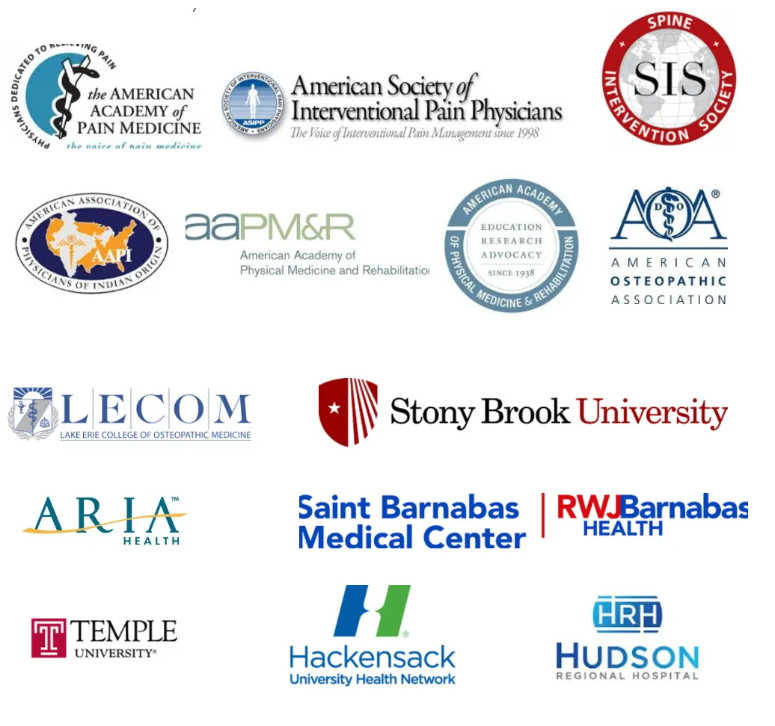
College: East Tennessee State University B.S. Biology with honors
Medical School: Lake Erie College of Osteopathic Medicine
Internship: Aria Health System via Philadelphia College of Osteopathic Medicine
Residency: Physical Medicine and Rehabilitation- Stonybrook University
Fellowship training: Pain Medicine- Temple University (ACGME accredited training program)
Board Certifications:
• Physical Medicine and Rehabilitation (AAPMR)
• Pain Medicine (ABA)
Society Memberships:
American Board of Physical Medicine and Rehabilitation (AAPMR)
American Society of Interventional Pain (ASIP)
Society of Interventional Pain (SIS)
American Society of Physicians of India (APPI)
American Society of Osteopathic Physicians (AOA)
State Licenses:
New York and New Jersey
Publications
• Frankenberger V, Desai J. Prosthetic Management of Residual Limb Ulcerations with a Vacuum Assisted Socket Suspension: American Journal of Physical Medicine and Rehabilitation. Volume 87 (3), Page S49, March 2008
• Tang N, Desai J, Stickevers S, Awan G. Hip, Buttock, and low back pain associated with ischiogluteal bursitis a case report: American Journal of Physical Medicine and Rehabilitation. Volume 88, (3) Page S12, March 2009.
• Desai J, Stickevers S. Treatment of post amputation focal dystonia with Botulinum Toxin A: American Journal of Physical Medicine and Rehabilitation. Volume 88, No 3. Page S20, March 2009.
• Desai J, Lai Y. Methylmethacrylate (MMP) hypersensitivity reactions post orthopedic hardware implantation: A case report: American Journal of Physical Medicine and Rehabilitation. Oct 22, 2009.
• Desai, J, Fahmy, M. Herpes Zoster associated with Recurrent Bell’s Palsy: A Case Report: American Journal of Physical Medicine & Rehabilitation: 89(4): S79, April 2010.
• Desai, J, Semel, J. Assessing Fall Data in Rehabilitation Hospitals Leading to Prevention Strategies. American Journal of Physical Medicine & Rehabilitation: 89(4): S83, April 2010.
• Kohane, Dan, Desai, J. Case Report: Brachial Amyotrophic Diplegia (BAD). 2011 (AAP) Association of Academic Physiatrists. Annual Meeting in Phoenix, Arizona, April 12-16, 2011.
• Desai J, Falco F. A case study: Peripheral Nerve Stimulator (PNS) in treatment of intractable migraines. To be submitted for publication 2011
• Vesga R, Falco F, Husain A, Desai J. Chapter 12: Abdominal Pain and Treatment Options. In: Kaye A, editor. Understanding Pain: Taking Control of Your Life. Praeger/ABC-CLIO Press; 2011.
• Falco F, Desai J. Stimulation produced analgesia. In: Manchikanti L, Christo P, Trescot A, Falco F (eds.). Comprehensive Pain Medicine and Interventional Pain Management Board Review. Paducah, KY: ASIPP Publishing; 2011.
• Zhu Z, Falco F, Desai J. Intrathecal drug delivery. In: Manchikanti L, Christo P, Trescot A, Falco F (eds.). Comprehensive Pain Medicine and Interventional Pain Management Board Review. Paducah, KY: ASIPP Publishing; 2011.
• Onyewu C, Desai J, Falco F. EEG, MEG. In: Manchikanti L, Christo P, Trescot A, Falco F (eds.). Comprehensive Pain Medicine and Interventional Pain Management Board Review. Paducah, KY: ASIPP Publishing; 2011.•Desai, J, Sakheim, K. Anti-Depressants in Pain Management. Pain Management Clinical Pocket Guide. Currently in Publishing for spring of 2013.